















Key Differences Between Practical and Theoretical Knowledge
However, there’s certainly much more to it!
Studies have proved that practical knowledge and experience positively affect theoretical knowledge at a higher cognitive level.
But what exactly are the key differences between theoretical and practical knowledge?
And how can stakeholders benefit from these types of knowledge?
Let’s uncover this topic’s secrets and understand how to apply these types of knowledge in our classrooms.
Stay with us and read on.
What is Theoretical Knowledge?
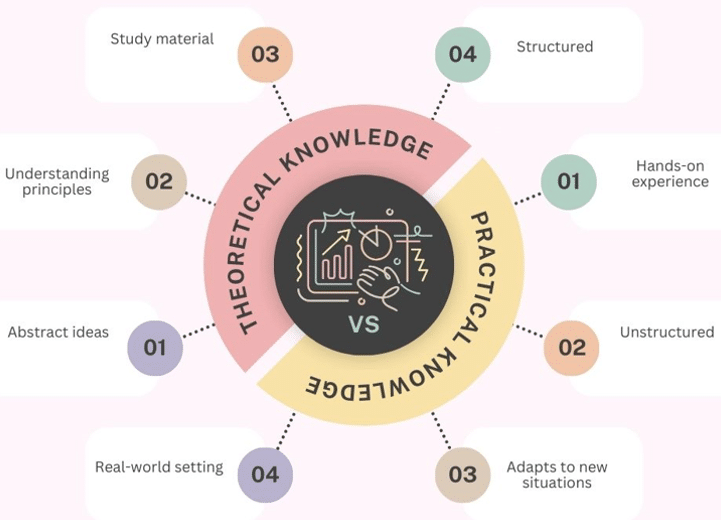
Theoretical knowledge is all about a particular subject’s ideas or abstract principles. One can gain this knowledge through books, instruction, scientific evidence, proven research, online content, etc. However, it is mostly limited to explanations and facts alone. In the broadest sense, this knowledge helps to build an understanding of a topic purely for academic or non-practical purposes.
Theoretical knowledge is also called ‘Knowledge-that’ or ‘Knowing-that’, as it is associated with nature, format, and factual information.
What is Practical Knowledge?
Practical knowledge is gained through one’s personal experience. It goes beyond the theoretical explanations. An individual can gain this knowledge through ‘hands-on’ activities. This knowledge builds practical reasoning abilities because of an individual’s intentional action.
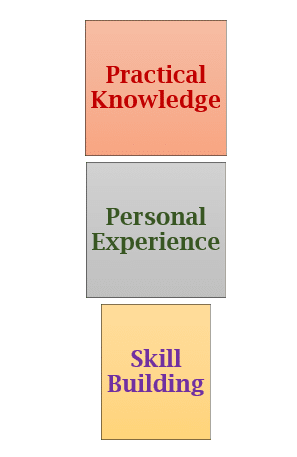
With the increasing dominance of technology in today’s age and date, there is a greater emphasis on adding practical experience to one’s theoretical understanding. However, both facets of knowledge are important for students. Hence, most online schools and traditional institutions amalgamate these facets of knowledge to build relevant skills in students.
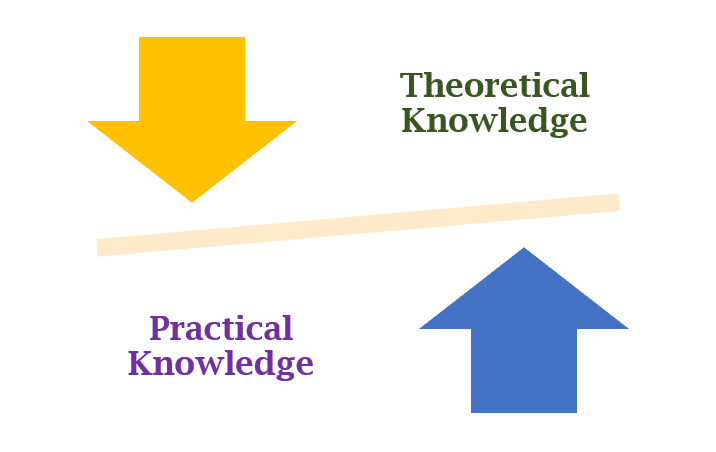
Theoretical Knowledge and Practical Knowledge- Comparison and Prominent Differences

Why Is It Essential to Acquire Theoretical Knowledge and Gain Practical Experience?
When students acquire theoretical knowledge, it helps them understand a known concept. This makes way for the next step and prepares the student to apply this knowledge in a practical scenario. Practical experience can be useless or take time and effort without this knowledge. This initial step of understanding the theory is the cornerstone to building the related skillset.
Imagine a student performing kitchen garden tasks without the knowledge of the right tools, appropriate soil types, seed quality, and favorable seasons.
Can you expect a seamless kitchen gardening experience with great outcomes despite efforts?
Obviously Not!
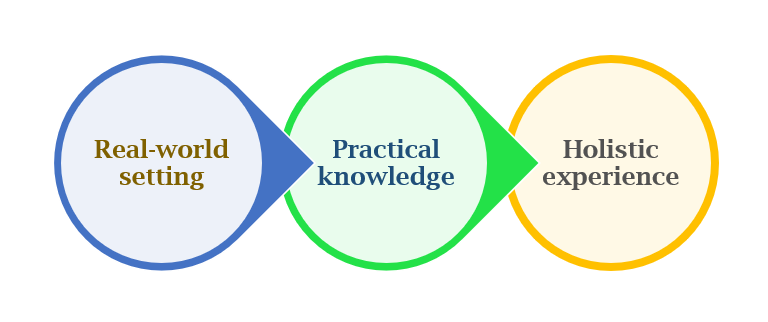
Understanding what lies behind a theory or a concept makes it easier to apply this knowledge in a real-world setting. Practical knowledge, on the other hand, makes the experience holistic by allowing opportunities to gain real insights. The skill-building process requires both these types of knowledge as we need both an understanding of a theory and a practical experience to build a real connection between information and application.
Steps to Strike a Balance Between These Facets of Knowledge while Planning Lessons?
- Boost background knowledge
- Give clear instructions
- Share real-life examples
- Assign hands-on projects
- Take learning beyond the classroom
- Let students collaborate
- Encourage students to make personal interpretations
Despite the importance of these facets of knowledge, there are many challenges to imparting practical knowledge at the ground level.
Challenges in Imparting Practical Knowledge
Our Indian education system is criticized for its excessive focus on theoretical knowledge. This deprives our students of quality education that matches global standards. Our Indian education system faces the following challenges:
Poor infrastructure in schools-
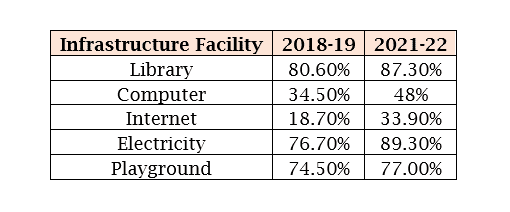
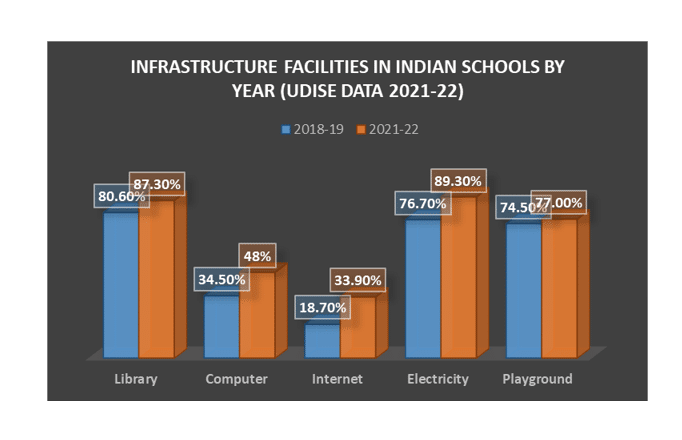
Indian schools have come a long way in terms of facilities. However, there is still a lot that needs to be achieved.
Here’s a glimpse of some ground realities as per the UDISE report 2021-22:
Gaps in the quality of education-
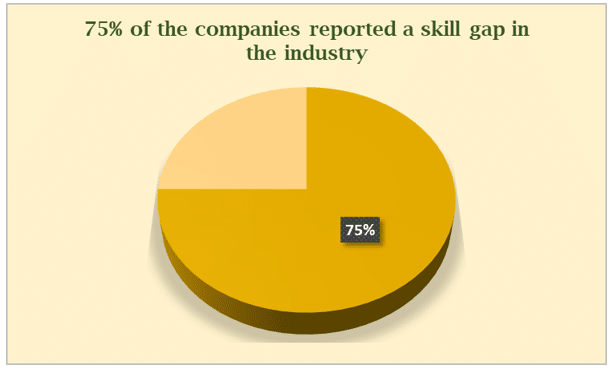
The education imparted in schools and colleges falls short of the industry-specific requirements, leaving employers dissatisfied with the quality of candidates. Besides, the lack of practical knowledge also has a long-term effect on one’s employability prospects.
Employers address this gap in the workforce as they invest a lot of time and effort in training candidates for their respective job profiles.
75% of the companies reported a skill gap in the industry.
What are the Ways to Improve our Classroom Instructions to Build Practical Knowledge? (For Stakeholders)
Practicalising Theoretical Knowledge
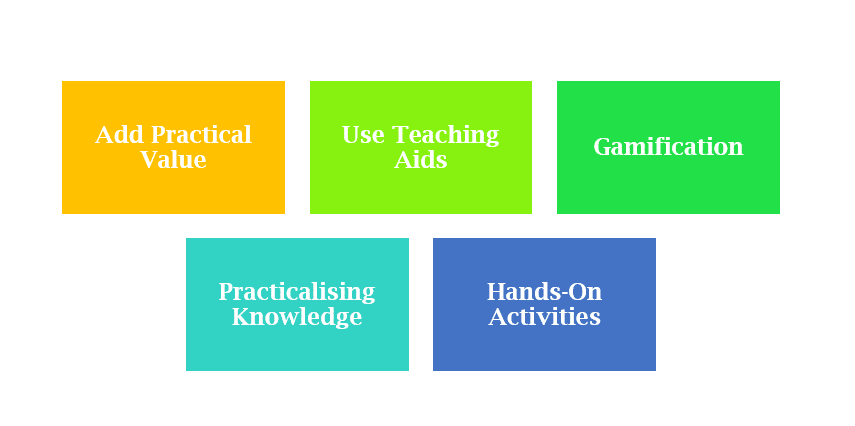
One of the most effective ways of planning instructional delivery is to combine approaches like lectures, projects, field trips, games, simulations, etc. Do not stick to a single strategy. Instead, create a lesson plan with hands-on learning elements to strengthen theoretical and practical knowledge simultaneously.
Make the Most of Technology
The next important point while discussing theoretical vs practical knowledge is the use of modern technology. Teachers can use gamification, simulations, and blended learning models for theoretical and practical uses. These initiatives create a dual effect on learning, adding more value to the classroom experience.
Fortunately, you can also use these approaches that top traditional and online schools follow. Technology offers many such cost-effective and interesting solutions to engage students.
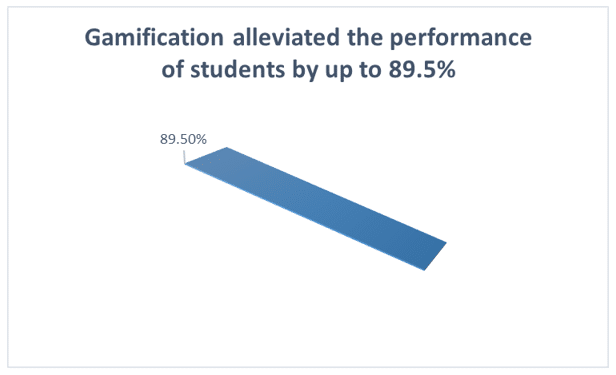
Do you know that research proves the power of gamification as an impeccable tool to improve a student’s learning?
Yes! As per a study, gamification alleviated students’ performance by up to 89.5% (compared to the ones taught through lectures and notes only).
Add Practical Value to Theoretical Concepts
The next important aspect of this discussion, related to theoretical vs practical knowledge, is adding practical value to theoretical concepts. Select the right teaching aids and use hand-made aids to make learning more permanent.
For instance, the impact of demonstrating a historical route used for invasion is much greater via a map. This aid perfectly demarcates rivers, forts, battlegrounds, city borders, entry points, etc, much better than a traditional lecture. All this adds more practical value to everyday teaching and learning. Do not forget to make it more interesting with projects, role-play activities, etc.
Final Thoughts
To sum up, for stakeholders, it is never theoretical vs practical knowledge; instead, it is a combination of both!
Do not get biased by the limelight on practical knowledge alone. Instead, trust yourself to impart theoretical knowledge through innovative and engaging approaches and add value with hands-on activities.
Thanks for Reading!
Frequently Asked Questions
1. Why is theoretical knowledge important?
Ans) Both theory and practical are important in their respective ways. Without knowing the theory, one cannot gain practical knowledge well.
2. Why is practical knowledge important?
Ans) Practical knowledge gives us an understanding of applying theoretical concepts in real life.
3. How do you gain theoretical knowledge?
Ans) One can acquire knowledge of the theory part through books, virtual resources, and classroom instructions.
4. How do you gain Practical knowledge?
Ans) To gain practical knowledge, we must add hands-on activities, arrange field or virtual trips, and assign project work.
Suggested Read
- Yoga for Kids: Discovering the Benefits and Fun of Yoga Poses
- Top 10 Schools in Indore 2023 with Curriculum, Fees & More
- Top 10 Schools in Bhopal 2023
- Top 10 Schools in Jaipur 2023
- Top 10 Best Schools in Chennai 2023
- Top 10 Schools in Lucknow 2023
- Top 10 Schools in Pune 2023
- Revolutionizing Education in 2023: The Rise of Online Education
- Top 10 Best Play Schools in Delhi For Admission 2023-24
- Top 10 schools in Kolkata 2023
- Top 10 Online Learning Platforms in India 2023